All Document Reader & Viewer
- 4.0
- Rating
- 1.00M
- Installs
- Free
- Price
 Analysis by App-foxy
I usually notice the value of a document app on an inconvenient day: someone sends me a PDF, a form arrives in another format, and I need to read or adjust it before moving on. All Document Reader & Viewer is aimed at that exact kind of situation. It is a free productivity app from Infinity Tech Systems that brings document reading and editing into one mobile workspace, rather than making me jump between separate viewers for different files.
After using it as an everyday document tool, I see its main appeal clearly. It is not trying to replace a full desktop office suite. Instead, it is most useful when the starting point is a phone or tablet and the immediate goal is to open, inspect, and make practical changes to a document without waiting until I reach a computer. Its broad document focus makes it convenient, although that same breadth means I would still choose a specialist editor for demanding layout work or advanced collaboration.
From a received file to a usable document
I focus on the small but important decisions between opening a file and sending it onward: checking which copy is current, deciding whether it needs an edit, and leaving the next person with a clear handoff. A useful habit is to keep the original separate from any working copy, especially when a document passes between household members. That makes the next step—setting sensible boundaries around shared-device use—easier to handle.
You May Also Like

 Blood Strike: 2.5 Anniversary
Blood Strike’s Loadouts Turn Every Drop Into a Tactical Gamble
A close look at Blood Strike’s custom loadouts: how fast access to signature weapons reshapes its battle royale rhythm, rewards preparation, and narrows the gap between fights.

 Pandora - Music & Podcasts
Pandora’s Music Is Easy to Start, but Harder to Recover
Pandora’s strength is its low-effort path from a seed to a station. Its weak spot is how much confidence it asks you to place in connection, setup, and quiet recovery.

 8 Ball Pool
 Is Built on Rivalries, Rematches, and Routine
A close look at the rivalries, rematches, shared routines, and unanswered safety questions that turn a quick pool match into a persistent mobile community.

 Samsung Music
’s Quiet Strength Is Playing What You Already Own
Its reach comes less from spectacle than from dependable access to a personal library. That simplicity is both the app’s strongest retention engine and its ceiling.

 AccuWeather: Weather Radar
AccuWeather Review: A Quick, Clear Forecast for Everyday Decisions
For everyday plans, the best forecast is the one you can understand quickly. AccuWeather makes rain timing, radar, and local conditions easy to act on, with a few trade-offs.

 Hill Climb Racing
Why Hill Climb Racing Still Turns Crashes Into One More Run
A tiny car, a bumpy hill and one more upgrade: Hill Climb Racing keeps resurfacing because its simple chaos makes every near-miss feel personal.
More From Our News Desk



Starting with the file that caused the problem
The natural starting condition is simple: a document lands on the device and I need to understand it. That might be a PDF attached to an email, a form shared through a messaging app, or a file saved earlier for offline reading. Instead of treating the PDF as something that can only be viewed, this app presents it as part of a wider document workflow. That distinction matters when I need to move from reading to making a small correction or preparing the file for the next person.
The app is listed in the productivity category, and that is a better description than calling it only a PDF viewer. Its store summary focuses on reading different document types and editing them, so the experience is built around reducing the number of document apps I need for routine work. I found that especially helpful when a task begins with one format but ends with a document that must be reviewed or adjusted before sharing.
Installation is accessible for older devices because it supports Android 6.0 and later. That is useful if I am working with a spare phone, an inexpensive tablet, or a device that is not running the newest software. The app is rated for Everyone, which also makes it suitable for general household, school, and office use without presenting itself as a niche professional tool.
The scale of adoption gives some reassurance when deciding whether to try it. All Document Reader & Viewer has passed the one-million-install mark and holds a 4.3 average from roughly one thousand ratings. I would not treat those figures as proof that it will suit every workflow, but they do suggest that the basic idea has found a sizeable audience.
Opening and sorting out what needs attention
Once I have the file on the device, the first useful habit is to identify the task before editing anything. If I only need to read a contract or check a page, opening it in the viewer is enough. If I need to add information, correct a detail, or prepare a revised copy, I move into the editing side instead of repeatedly reopening the original. This small separation helps prevent accidental changes to the source document.
For a mixed folder, the app’s all-document approach is more convenient than keeping a PDF-only tool beside a separate reader for other formats. I can use the same general environment to inspect files as they arrive, which reduces the mental overhead of remembering which app handles which attachment. The benefit is less about a flashy feature and more about removing a handoff at the beginning of the job.
I recommend keeping the original file untouched whenever the document matters. Make a working copy before editing, then use a clear filename that identifies the version or purpose. This is a practical safeguard rather than an app feature, but it makes the mobile workflow much safer. A phone is a convenient place to make a quick change, yet it is also an easy place to overwrite the only copy of an important document.
Reading before editing
The reading stage is where I would use the app most often. A mobile document viewer needs to make pages easy to inspect, because the screen is smaller than a laptop display and documents often contain dense text, tables, or forms. I found the combined reader-and-editor concept helpful because I can first check whether the file is the right one and only then decide whether it needs modification.
That order is particularly useful for shared documents. A colleague may send a revised attachment while an older copy is already stored on the phone. Opening the file, checking its contents, and confirming the version before editing avoids a surprisingly common mistake: doing careful work on the wrong attachment and sending it back as if it were current.
For long reading sessions, I would still prefer a larger screen when possible. The app makes a phone practical for checking documents, but comfort depends on the file and the device. Short forms, receipts, instructions, and several-page PDFs are a natural fit. A long report with small tables is better handled on a tablet or computer, especially when I need to compare pages side by side.
Moving from inspection to editing
The most useful transition happens when reading reveals a small action that cannot wait. Perhaps a form needs a missing detail, a document needs a correction before it is forwarded, or a page must be prepared for someone else to review. Having editing available in the same app means I do not have to export the file to another tool simply to continue the task.
My advice is to edit with a narrow objective. On a mobile screen, it is easy to lose track of the original layout while concentrating on a single field or line. I would make the necessary change, inspect the surrounding page, and then review the whole document once before handing it off. That final pass matters because a document can look correct at the point of editing while another page still contains an outdated detail.
This is also where expectations should stay realistic. A general document editor is convenient for routine changes, but it is not automatically the best choice for rebuilding a complicated publication. If the file depends on precise typography, complex tables, extensive comments, or carefully controlled page breaks, I would move the job to a desktop office application. The mobile editor is strongest when speed and access matter more than elaborate formatting control.
Handoffs between people and devices
A document rarely ends with the person who first opens it. In a realistic workflow, I might receive a PDF, review it on my phone, make a small adjustment, and then send it to a colleague who checks the result on a computer. That handoff is where disciplined file handling becomes as important as the editor itself.
Before sharing, I would confirm three things: the intended file is attached, the last change is visible, and the document opens normally after saving. I would also avoid sending a confusing collection of similarly named copies. A simple name such as “form revised” is more useful than leaving several files with automatic names and hoping the recipient chooses correctly.
The app’s value in this chain is that it can serve as the mobile middle step. It is not limited to the person who only reads documents, nor does it force every minor adjustment to wait for a computer. That makes it suitable for students checking coursework, families handling administrative forms, and workers who receive documents while away from their desk.
At the same time, I would not assume that a mobile edit preserves every detail exactly as a desktop application would. After a substantial change, the receiving person should inspect the final file on the platform they will use. This is not a criticism unique to this app; it is a general trade-off of editing complex documents on a smaller device. Convenience improves, but the need for a final visual check remains.
What the finished result looks like
The best outcome is not simply that a file opens. It is that I can go from an unexpected attachment to a readable, usable document without installing a chain of separate utilities. For a quick form, a reference PDF, or a document that needs a modest correction, that shorter route is the reason I would keep this app available.
Imagine receiving a school permission form while commuting. I could open it to check the instructions, fill in the information that needs attention, review the completed pages, and pass the revised document to the other parent or school contact. The important advantage is continuity: reading, deciding, editing, and preparing the handoff happen in one document-focused place instead of being scattered across a viewer, file manager, and separate editor.
Another realistic case is a small business owner who receives a supplier document on a phone. The owner may only need to read the terms immediately, mark the file for later action, and make a basic correction before forwarding it. All Document Reader & Viewer fits that middle ground better than a heavyweight office suite that feels excessive for a short task.
Where the workflow breaks down
The app becomes less convincing when the job depends on advanced document production rather than practical mobile handling. If I need extensive spreadsheet calculations, sophisticated presentation design, detailed version control, or live collaboration with several people, I would choose a dedicated office platform. A broad reader and editor can cover many formats, but breadth is not the same as depth in every format.
There is also a cost consideration. The app is free to download and use as a general productivity option, but it includes in-app purchases ranging from $9.99 to $38.99 per item. That means I would start with the free experience and decide whether the available tools justify paying for anything beyond it. For someone who only reads occasional PDFs, spending money may not make sense; for frequent mobile document work, the extra value could be easier to justify.
Another limitation is the physical context. Editing on a phone is convenient when I am away from a desk, but it can be slower and less precise than using a keyboard and larger display. I would not choose this app as my main environment for preparing a long report from scratch. I would choose it when the document already exists and the task is to read, check, adjust, or pass it along efficiently.
File organization also depends on the user’s habits. A document app can make opening files easier, but it cannot replace a sensible folder structure or careful naming. If I allow downloads to accumulate without sorting them, finding the correct version can still be frustrating. The app helps with the document itself; it does not remove the need to manage the surrounding workflow.
Who should use it, and who should skip it
I would recommend this app to people who regularly receive PDFs and other documents on mobile devices, especially those who want one practical place for reading and occasional editing. It is a good match for students, families, freelancers, field workers, and small teams that need to keep document tasks moving while away from a computer.
It is also a sensible choice for someone replacing several narrowly focused viewers with one broader productivity app. The strongest benefit is not that every task becomes perfect; it is that ordinary document tasks require fewer app changes. That can save time when the file is urgent and the edit is modest.
I would skip it as a primary tool if my work depends on exact publishing layouts, deep office-suite functions, or a collaborative editing environment. In those situations, a dedicated desktop or cloud office solution is likely to be more comfortable and more capable. I would also think twice if I only open a PDF once in a while and have no need to edit documents, because a simpler reader may be all I need.
My practical verdict after following the full workflow
All Document Reader & Viewer succeeds when I treat it as a mobile document station rather than a complete replacement for every office program. Its useful path is clear: receive a file, open it, understand what it contains, make a focused change when necessary, check the result, and hand it to the next person. That workflow is more valuable than the short store summary suggests because it addresses the awkward middle stage between receiving a document and finishing with it.
The app was released on March 5, 2024, and its current version is 5.0. Those details place it in a relatively recent product cycle, while support for Android 6.0 and later keeps it available to a wide range of devices. Infinity Tech Systems has positioned it as an accessible tool for general document work, and the Everyone rating reinforces that broad audience.
My final recommendation is positive, with a clear boundary. If you want a free starting point for reading different documents and handling straightforward edits on Android, this is worth trying. Keep the original before editing, review the entire file before sharing, and use a larger screen for complex layouts. The real strength is the shorter path from received attachment to ready-to-send document. It is less suitable when that path turns into full-scale document production, but for everyday mobile paperwork, it is a practical and flexible choice.
FAQs for All Document Reader & Viewer
01What file formats does All Document Reader & Viewer support?
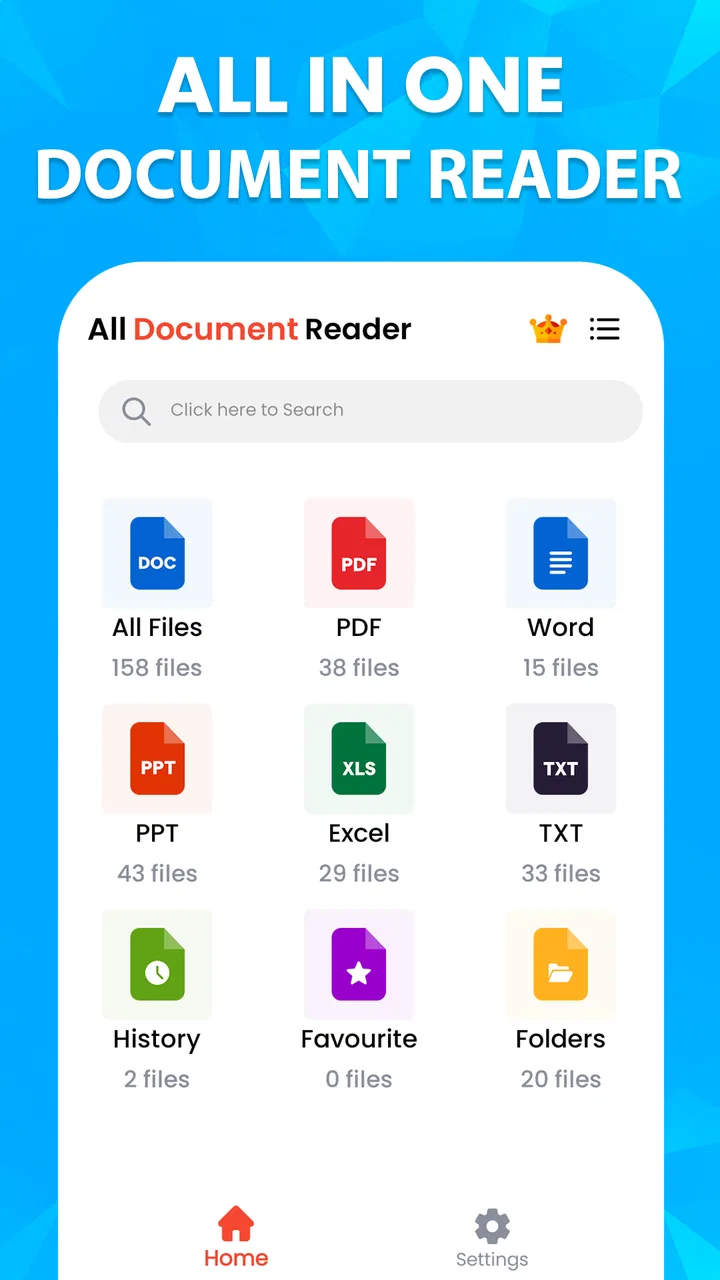
All Document Reader & Viewer is designed to support a wide range of file formats, including PDF, DOC, DOCX, XLS, XLSX, PPT, PPTX, and TXT. This versatility ensures that users can manage and view all their essential documents without needing multiple apps, making it a convenient solution for diverse document needs.
02Is All Document Reader & Viewer available for both Android and iOS devices?
Yes, All Document Reader & Viewer is available for both Android and iOS platforms. This cross-platform availability ensures that users can access their documents on a wide range of devices, maintaining consistency and accessibility whether you're using a smartphone or a tablet.
03Does All Document Reader & Viewer require an internet connection to function?
No, All Document Reader & Viewer can function offline, which is a significant advantage for users who need to access their documents without internet connectivity. Once the app is downloaded and installed, all features are accessible offline, ensuring productivity on the go without worrying about data usage.
04Are there any in-app purchases or premium features in All Document Reader & Viewer?
While All Document Reader & Viewer offers a robust free version, there are premium features available through in-app purchases. These may include advanced editing tools, ad-free experience, and additional cloud storage options. Users can choose to upgrade for an enhanced and more comprehensive document management experience.
05How user-friendly is the interface of All Document Reader & Viewer?
All Document Reader & Viewer is designed with a user-friendly interface that caters to both novice and experienced users. The intuitive navigation and clear layout make it easy to open, view, and manage documents. Users praise its straightforward design, which allows for efficient document handling without a steep learning curve.
Pros
- Supports multiple file formats effortlessly.
- Easy-to-use interface for quick navigation.
- Built-in file manager for better organization.
- Offline access to documents is available.
- Fast loading speeds for large files.
Cons
- Contains ads that can disrupt usage.
- Limited editing capabilities for documents.
- Occasional crashes with very large files.
- No cloud sync feature available.
- Some features require in-app purchases.

All Document Reader & Viewer
Gallery